
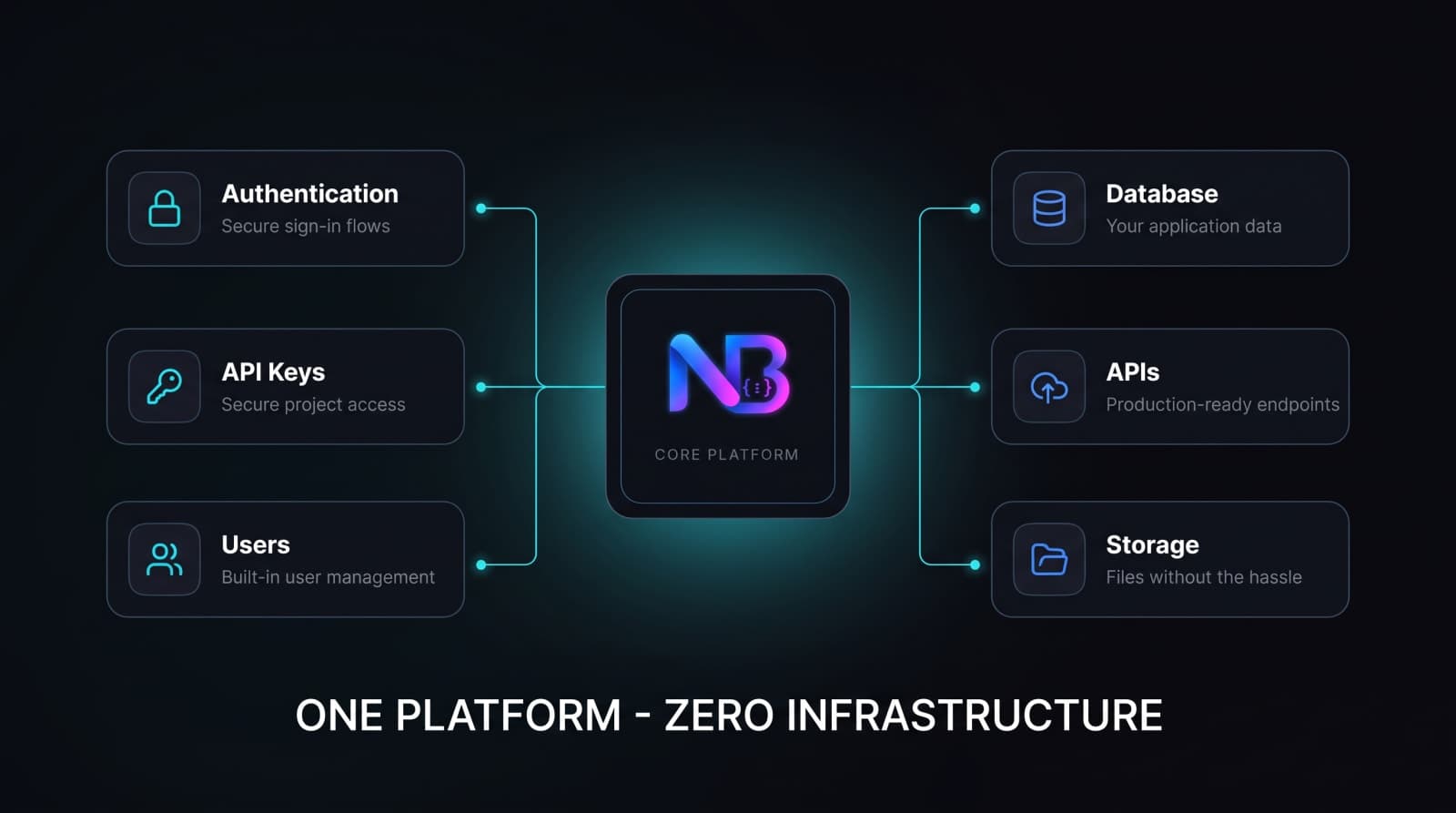
Build Applications Faster with NullBackend
Modern application development requires more than an attractive user interface. Every application needs a backend to manage data, handle requests, protect sensitive operations, and connect different parts of the system.
Traditionally, developers have had to build and maintain these backend components themselves. This often involves configuring servers, setting up databases, creating API endpoints, implementing security measures, and monitoring performance.
For individual developers, startups, and small development teams, these tasks can take valuable time away from building the actual product.
NullBackend is designed to simplify backend development so you can spend less time managing backend infrastructure and more time creating your application.
What Is NullBackend?
NullBackend is a backend-as-a-service platform designed to help developers connect their applications to backend functionality without having to build every component from scratch.
Instead of creating a complete backend infrastructure for every project, developers can use NullBackend to work with backend services and APIs through a more streamlined workflow.
The goal is simple: reduce repetitive backend development work and make it easier to move from an idea to a working application.
Whether you are developing a web application, a SaaS product, a dashboard, or a prototype, a backend platform can help simplify the process of connecting your frontend to the services it needs.
Why Do Developers Need a Backend Platform?
Consider building a new application using a traditional development approach.
First, you configure a backend server. Then, you connect a database, develop API endpoints, handle authentication, implement access controls, and test requests. As your application grows, you also need to monitor errors, manage credentials, and maintain the infrastructure.
Each component requires development time and ongoing attention.
A backend-as-a-service platform can reduce some of this repetitive work by providing a more convenient way to access backend capabilities.
Developers can benefit from:
Faster development: Spend less time creating repetitive backend components.
Simplified API integration: Connect frontend applications to backend services through API requests.
Centralized management: Manage project-related backend settings in one place.
Improved development workflow: Test and troubleshoot requests more efficiently.
More time for product development: Focus on user experience, business logic, and application features.
The right platform does not eliminate every backend responsibility, but it can make development more efficient.
How NullBackend Works
Getting started with a backend platform should be straightforward.
A typical workflow with NullBackend follows these steps:
1. Create a Project
Start by creating a project for your application. Keeping backend configuration associated with a specific project helps organize development and integration.
2. Configure Your Backend
Set up the available backend features and project settings you need. Depending on your application, this may include database-related functionality, API configuration, authentication, or access controls.
3. Get Your API Keys
Use the appropriate project credentials to connect your application to NullBackend. Keep secret keys on the server side and never expose privileged credentials in browser-based frontend code.
4. Connect Your Application
Integrate the relevant APIs into your frontend or server-side application. Your application can then send requests to the configured backend services.
5. Test and Monitor Requests
Use available development tools, request logs, and configuration settings to help identify errors and troubleshoot integration issues.
This workflow helps bring project setup, backend integration, and testing into a more manageable development process.
Key Benefits of NullBackend
Reduce Repetitive Backend Work
Many applications need similar backend foundations. Rebuilding these components for every project can slow development.
NullBackend aims to simplify this process, helping developers concentrate on the features that make their products different.
Simplify API Integration
APIs connect the frontend of an application with backend services. A structured API workflow makes it easier to send requests, process responses, and integrate backend functionality into existing applications.
Developers can use API-based integration patterns to connect their preferred frontend technologies with the backend capabilities available to their projects.
Improve Developer Productivity
Time spent on infrastructure setup is time that could be used to improve the product.
By streamlining backend-related workflows, NullBackend can help developers work more efficiently, especially when building prototypes, internal tools, dashboards, and early-stage SaaS applications.
Make Project Management Easier
Keeping backend settings, credentials, and development tools organized helps reduce unnecessary complexity as projects evolve.
A centralized project workflow can make it easier to manage configuration and understand how an application connects to its backend.
Support a More Focused Development Process
Frontend developers often want to concentrate on components, interfaces, state management, and user interactions rather than repeatedly building backend foundations.
A backend platform can reduce this burden and help teams focus on delivering application features.
Who Can Benefit from NullBackend?
NullBackend is relevant to several types of developers and teams.
Frontend Developers
Developers working with React, Next.js, Vue, or other frontend technologies can benefit from a simpler way to connect applications to backend services.
Full-Stack Developers
Full-stack developers can use backend tooling to streamline repetitive setup tasks while retaining control over the application architecture where necessary.
Startups and SaaS Founders
Early-stage teams often need to validate ideas quickly. Reducing the time spent on backend foundations can help them concentrate on product development and customer feedback.
Freelancers and Agencies
Developers building multiple client projects may benefit from a consistent workflow for configuring and integrating backend services.
Students and Independent Developers
People learning application development can focus on understanding how frontend applications communicate with APIs while gradually exploring backend architecture and security.
NullBackend and Traditional Backend Development
Traditional backend development gives developers direct control over servers, databases, business logic, and infrastructure. However, it also requires them to build and maintain more of these components.
A backend-as-a-service platform takes a different approach by offering managed backend capabilities and simplifying selected development tasks.
The best option depends on your project.
Choose a traditional custom backend when you require highly specialized architecture, complete control over infrastructure, or complex processing that needs a custom implementation.
Consider a backend platform such as NullBackend when you want to streamline common backend workflows and reduce repetitive setup.
These approaches are not necessarily mutually exclusive. Some applications can combine managed backend services with custom APIs or independently hosted services.
Security Best Practices When Using NullBackend
Simplifying backend development does not remove the need for good security practices.
Every application should follow a few essential principles:
Protect secret keys: Never place privileged API keys in public frontend code, repositories, or client-side environment variables.
Validate requests: Validate incoming data on the server before accepting or processing it.
Apply access controls: Ensure users can access only the resources and operations they are authorized to use.
Use HTTPS: Protect data in transit by using secure connections.
Monitor errors and activity: Review available logs and investigate unexpected requests.
Manage credentials carefully: Rotate exposed credentials and remove access that is no longer required.
Always review NullBackend's current documentation to understand the specific security controls and configuration options available for your project.
Getting Started with NullBackend
If you are planning to build a new application or simplify an existing development workflow, start by identifying the backend functionality your project needs.
Create a project, review the available features, configure the appropriate credentials, and integrate the relevant APIs into your application.
Test your requests carefully before deploying to production, and follow secure credential-management practices throughout development.
Visit the official website to learn more:
Final Thoughts
Backend development is an essential part of building modern applications, but repetitive setup and infrastructure management do not need to dominate your development workflow.
NullBackend aims to make backend integration more accessible and efficient by simplifying how developers work with backend services and APIs.
By reducing unnecessary complexity, developers can dedicate more time to building useful features, improving user experiences, and turning ideas into working products.
If your goal is to build applications more efficiently, explore NullBackend and see how its available capabilities fit your development workflow.